






May 8, 2025
In Search Of Reality: Exploring the Line Between Science and Fiction
Posted by Insearchof
Blog is written with help of AI
Introduction
What if time travel were possible? Could artificial intelligence ever truly become conscious? Is it conceivable that our universe is just a simulation? These questions lie at the intersection of science and fiction, where imagination meets theoretical exploration.
At ‘In Search Of’, we delve into the blurred boundaries between reality and the speculative. From scientific theories that sound like fiction to fictional ideas that inspire real-world innovation, let’s explore where fact and fantasy converge.
1. Simulation Theory: Are We Living in a Computer Program?
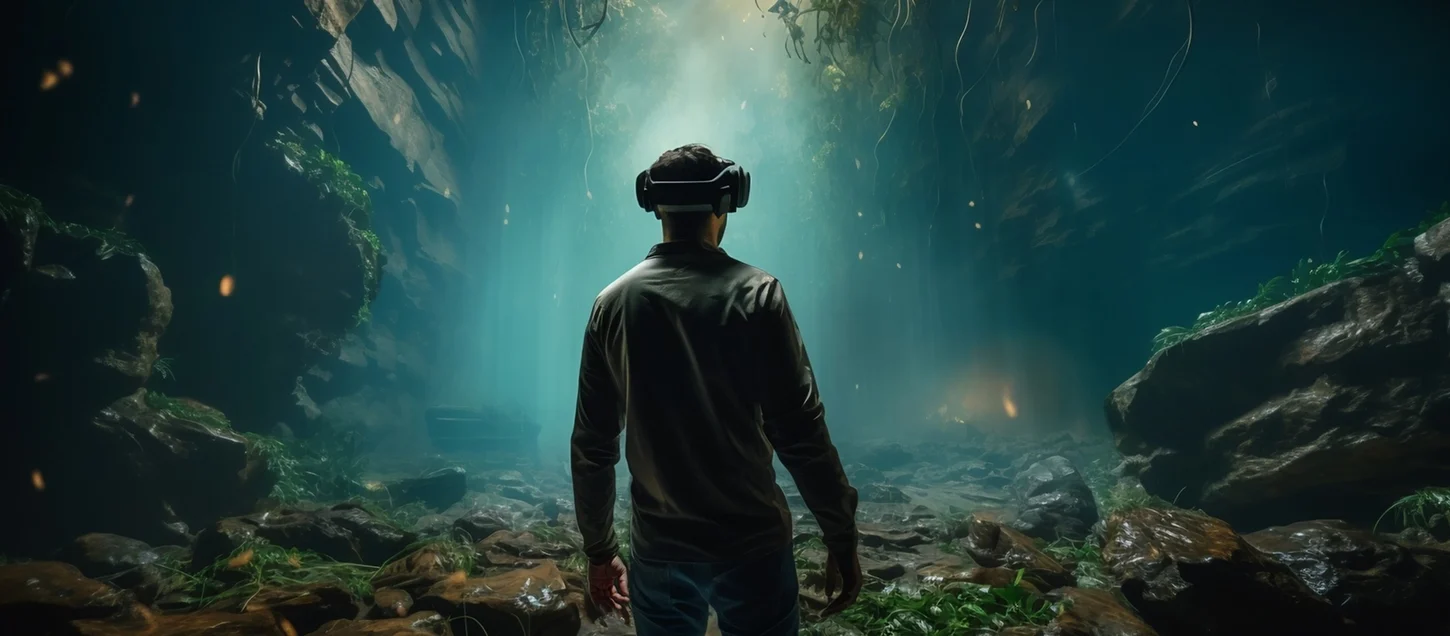
Popularized by scientists like Nick Bostrom and pop culture phenomena like The Matrix, the Simulation Hypothesis proposes that our reality might be an elaborate computer simulation.
- Scientific Basis: Technological advancements in virtual reality and AI hint at the potential to create convincing simulations. Some physicists argue that certain patterns in quantum mechanics resemble computational processes.
- Philosophical Implications: If true, this theory challenges our understanding of existence. Are we conscious beings or merely data points in a digital construct?
2. Time Travel: The Science Behind the Fantasy
From H.G. Wells’ “The Time Machine” to Interstellar, time travel fascinates and perplexes. While purely fictional for now, physics offers some intriguing possibilities.
- Einstein’s Theory of Relativity: Time dilation suggests that time flows differently for objects moving at high speeds. Theoretical constructs like wormholes could connect distant points in spacetime.
- Grandfather Paradox: If you traveled back and altered the past, would it negate your existence? This paradox hints at the complex nature of causality.
While time travel remains speculative, ongoing research in quantum mechanics keeps the dream alive.
3. Artificial Intelligence and Consciousness: Human or Machine?
Science fiction often portrays AI as either a utopian assistant or a dystopian overlord. As AI becomes more advanced, the line between human consciousness and machine intelligence becomes increasingly blurred.
- The Turing Test: Proposed by Alan Turing, it tests a machine’s ability to exhibit intelligent behavior indistinguishable from a human.
- Conscious AI: Philosophers debate whether AI can possess consciousness or self-awareness, or whether it merely simulates responses without true understanding.
If machines can think, feel, or even create, what does that mean for our concept of human identity?
4. Parallel Universes: Fiction or Scientific Fact?
Stories like Philip K. Dick’s “The Man in the High Castle” explore alternate realities where history took a different path. While seemingly fictional, some scientific theories support the existence of parallel universes.
- Multiverse Theory: Quantum mechanics suggests that every decision may create a branching reality. The Many-Worlds Interpretation implies that multiple versions of ourselves could exist simultaneously.
- Brane Cosmology: In string theory, our universe might be just one of many membranes floating in a higher-dimensional space.
Is the idea of countless alternate realities purely speculative, or could they coexist beyond our perception?
5. Alien Life: Fact, Fiction, or Both?
Are we alone in the universe? From H.G. Wells’ “War of the Worlds” to recent UFO disclosures, the concept of extraterrestrial life straddles the line between myth and potential reality.
- The Fermi Paradox: If intelligent life is statistically probable, why haven’t we found it? Possible solutions include the Great Filter or the idea that alien civilizations are purposefully avoiding us.
- SETI and Exoplanet Research: Ongoing efforts to detect alien signals and the discovery of potentially habitable exoplanets keep the search alive.
Conclusion: When Imagination Meets Reality
What was once considered pure fiction can sometimes become scientific reality. Conversely, even the most speculative theories often contain a kernel of truth that inspires real-world innovation.
At ‘In Search Of’, we believe that exploring the boundaries between science and fiction not only broadens our minds but also pushes us to question what’s truly possible. Have you ever wondered if your favorite sci-fi story might hold a hidden truth? Share your thoughts—because every idea, no matter how fantastical, begins with curiosity.
