






May 8, 2025
In Search Of the Golden Ratio: Nature’s Secret Formula Revealed
Posted by Insearchof
Blog is written with help of AI
Introduction
What do a sunflower, a seashell, and the Parthenon have in common? They all embody one of the most fascinating mathematical phenomena known to humanity—the Golden Ratio. Often symbolized by the Greek letter Φ (phi), the Golden Ratio (approximately 1.618) appears in art, architecture, nature, and even the human body. But why does this ratio keep appearing, and what makes it so captivating?
At ‘In Search Of’, we delve into the mysteries of the Golden Ratio, exploring its mathematical foundations, its presence in nature, and its profound influence on human creativity and perception.
1. The Mathematics Behind the Magic
The Golden Ratio can be expressed as the following equation:
Φ = (1 + √5) / 2 ≈ 1.6180339887…
This irrational number arises when a line segment is divided into two parts such that the ratio of the longer part to the shorter part is equal to the ratio of the whole segment to the longer part. Mathematically speaking, if a and b are parts of the segment, then:
(a + b) / a = a / b = Φ
The simplicity and elegance of this equation have intrigued mathematicians for centuries.
2. Nature’s Artful Design
Nature seems to instinctively use the Golden Ratio to achieve harmony and balance. Here are some captivating examples:
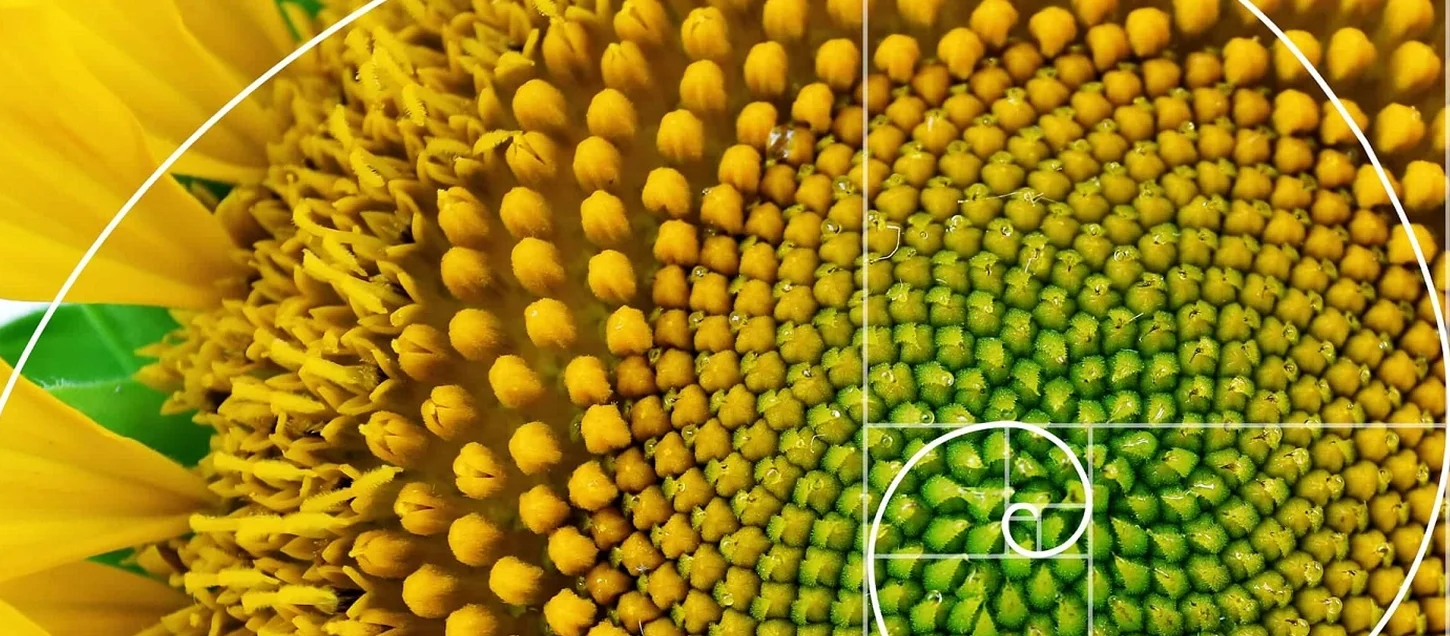
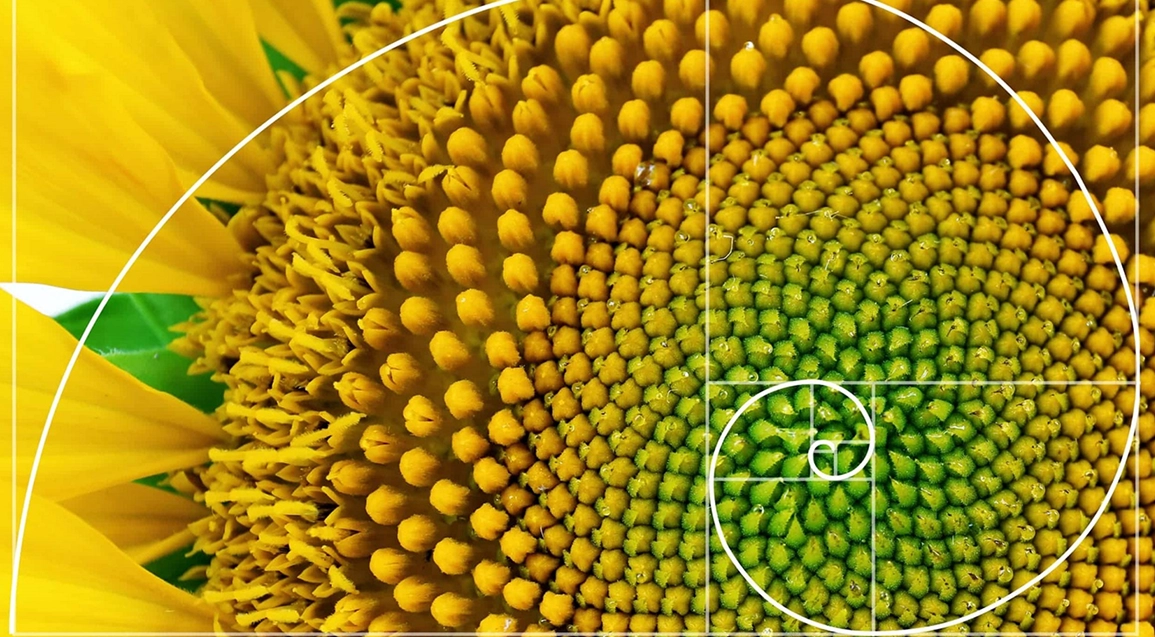
- Flower Petals and Seed Patterns: Sunflowers and daisies display seeds arranged in spirals that follow Fibonacci sequences, inherently linked to the Golden Ratio.
- Seashells and Spiral Galaxies: The iconic spiral shape of nautilus shells and galaxies like the Milky Way exhibit logarithmic spirals that grow by a factor of Φ.
- Human Anatomy: The proportions of the human face and body, from the length of the forearm to the hand, mirror the Golden Ratio, often perceived as aesthetically pleasing.
Why nature follows this mathematical pattern remains a subject of debate. Some theories suggest that the Golden Ratio represents an efficient way to pack and grow, while others view it as a natural symmetry that evolution favors.
3. The Golden Ratio in Art and Architecture
Throughout history, artists and architects have harnessed the Golden Ratio to create visually harmonious works:
- Ancient Wonders: The Great Pyramids of Egypt and the Parthenon in Greece are believed to incorporate Φ in their dimensions.
- Renaissance Masterpieces: Leonardo da Vinci, fascinated by the ratio, used it in his iconic works like the Vitruvian Man and the Mona Lisa.
- Modern Design: Today, the Golden Ratio influences everything from logo designs to website layouts, subtly guiding our perception of balance and beauty.
4. A Universal Principle or Human Fascination?
Is the Golden Ratio a fundamental law of the universe, or is it merely a pattern we see because we want to? While its prevalence in nature is undeniable, some scientists argue that it might be a cognitive bias—humans are simply drawn to this proportion, and we seek it out even when it might not truly be present.
Regardless of the debate, one thing is clear: the Golden Ratio continues to captivate and inspire, bridging mathematics with art, science, and spirituality.
Conclusion: The Endless Quest for Balance
The Golden Ratio remains one of nature’s most intriguing secrets—a perfect blend of mathematics, aesthetics, and wonder. It reminds us that beneath the chaos of life lies a pattern, a subtle order that shapes everything from galaxies to flowers.
What are your thoughts on the Golden Ratio? Have you seen it in unexpected places? Share your stories with us—because every discovery, every observation, adds to our collective search for meaning.
